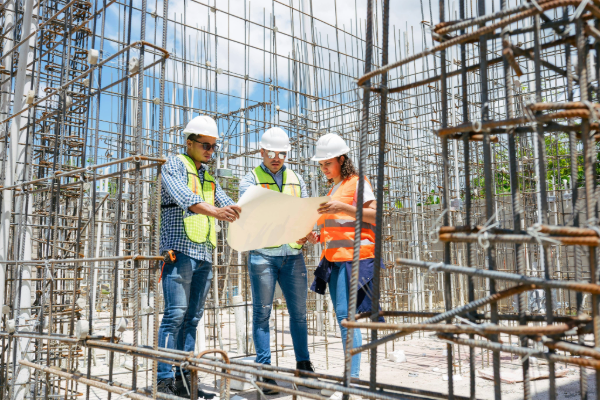
Construction and engineering companies often miss out on the R&D tax credit because they assume “innovation” only applies to labs or tech firms. In reality, design challenges, material testing, modeling, and engineering problem-solving all qualify.
If your team is creating something new, improving a design, or solving technical uncertainties, you may already be performing R&D.
Construction and engineering teams face constant technical challenges:
Any time your team experiments, models, tests, or redesigns to answer questions like these, you’re engaging in qualified research.
Below are the most frequent types of qualifying work—most firms do at least one of these on a daily basis.
Engineering teams routinely experiment with ways to improve:
Qualifying activities include:
If the final solution wasn’t known at the start, it likely qualifies.
Digital modeling is more than documentation—it’s experimentation.
Examples that qualify:
BIM work that solves uncertainty is considered R&D.
Construction materials change constantly, and testing them is technical by nature.
Qualifying activities include:
If you tested more than one option—you performed R&D.
Systems design often involves significant experimentation to meet performance goals.
Qualifying activities include:
When engineers design beyond standard templates, it qualifies.
Construction rarely happens in “standard” conditions.
Examples of qualifying R&D:
If the team must “figure it out,” there is R&D involved.
Sustainability innovation is accelerating—and often qualifies.
Examples:
High-performance building strategies are full of eligible R&D.
Many firms qualify without realizing it. This includes:
If your company solves technical challenges, you likely qualify.
Construction and engineering firms can claim:
Engineers, project managers, drafters, technicians, architects, supervisors.
Materials consumed during testing or prototyping.
Third-party engineering analysis, testing, or modeling.
CAD, BIM, simulation, and modeling tools used for experimentation.
These can create substantial credits, even for firms with modest R&D.
Most companies assume:
But the IRS does not require research to be “new to the world.”
It only has to be new to your team, involve uncertainty, and require experimentation.
Construction checks these boxes more often than any other industry.
We translate complex engineering and construction processes into IRS-qualified research.
Our team handles:
Your team continues doing what it does best—building and engineering.
We handle the R&D.
Construction and engineering companies innovate constantly—through design, modeling, testing, problem-solving, and iteration.
These everyday activities often qualify for significant R&D tax benefits.
If your team is improving performance, solving challenges, or testing alternatives, you’re likely doing R&D already.
Wondering whether your engineering or construction projects qualify? Contact B10 Capital today for a no-pressure eligibility review.
Insights into sophisticated tax benefits designed for high-net-worth individuals and businesses.